
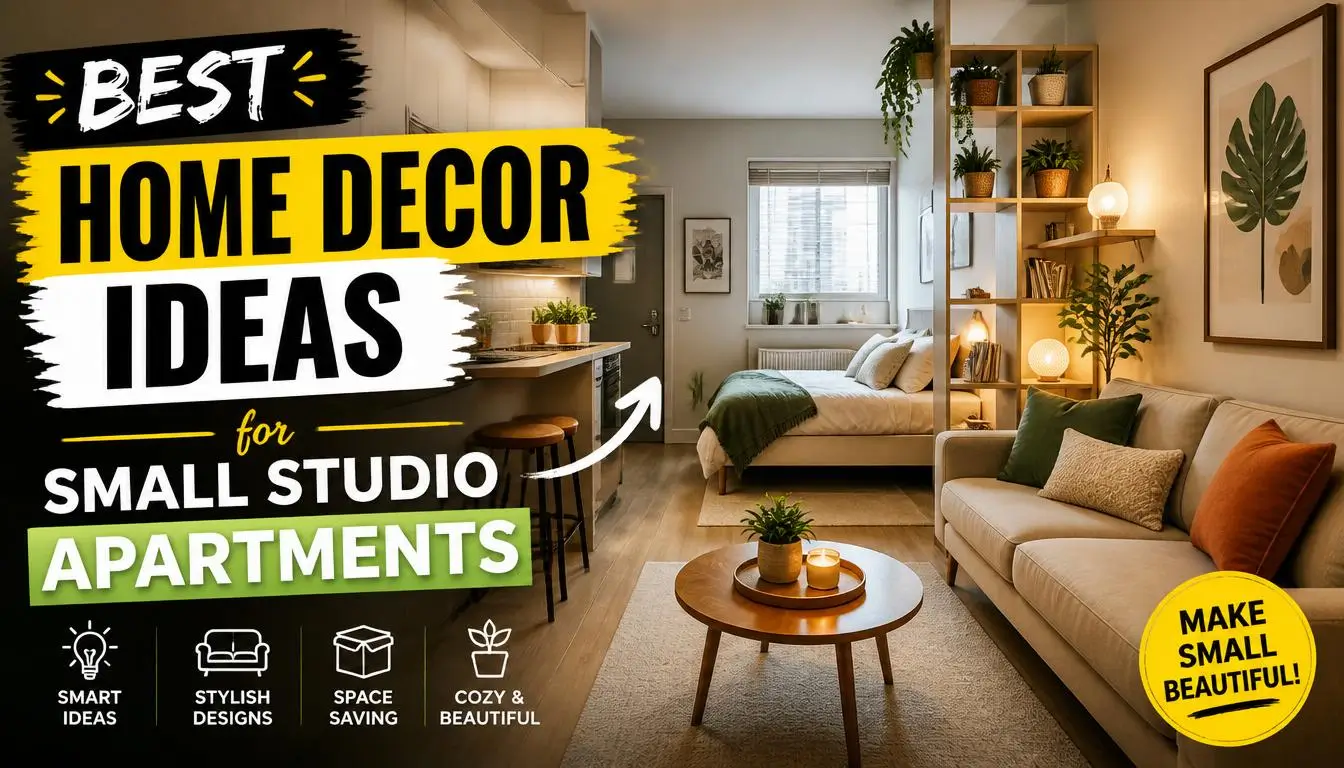
Finding the best home decor ideas for small studio apartments is basically a survival skill when your entire life fits inside one room. I moved into my 400-square-foot studio three years ago, and I’ll be honest, I cried the first night. The walls felt like they were closing in, and my stuff was everywhere. But after a lot of trial and error (and some questionable IKEA hauls), I figured out how to make a tiny space feel genuinely good to live in. These are the ideas that actually worked for me.
1. Use a Room Divider That Doubles as Storage
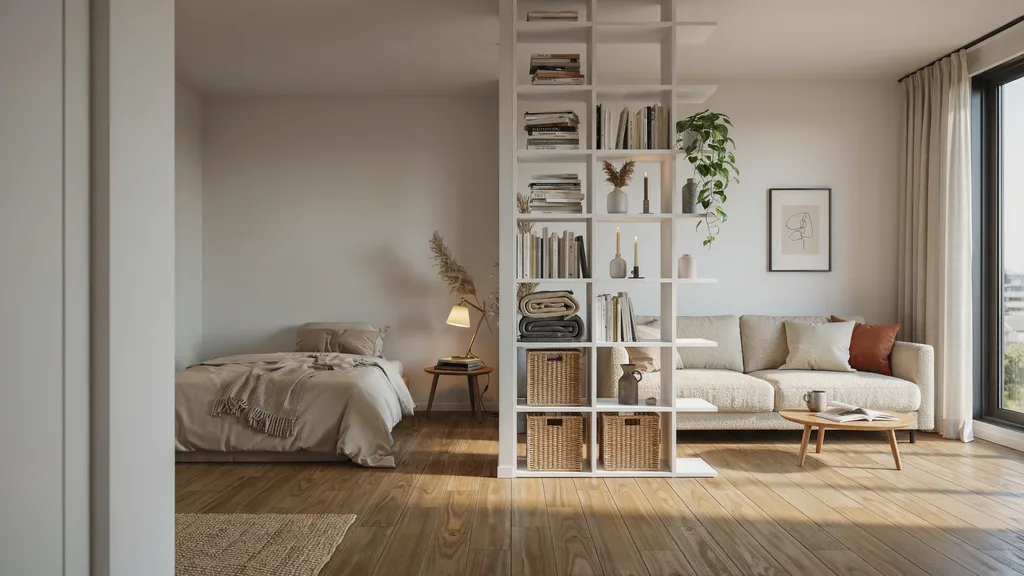
A bookshelf room divider changed everything in my studio. I grabbed a Kallax unit from IKEA, turned it sideways, and suddenly I had a “bedroom” and a “living room” without losing a single square foot to a wall.
The beauty of this approach is that you get separation and storage at the same time. I keep books and baskets on the living room side and use the bedroom side for folded clothes and candles. It makes the space feel intentional instead of chaotic. If a full bookshelf feels too heavy, an open-frame shelf works just as well and lets light pass through.
2. Hang Curtains to Create Zones
Curtains are the cheapest way to fake having rooms. I installed a ceiling-mounted curtain track from Amazon for about $25 and hung linen curtains to section off my sleeping area. During the day I tie them back, and at night I pull them closed.
What surprised me is how much this helped psychologically. When I close the curtains, my brain shifts into “bedroom mode.” It sounds silly, but that mental separation makes a studio feel twice as big. Go with light, airy fabric so you don’t block natural light. Heavy blackout curtains in a small space will make everything feel cave-like.
3. Mount Your TV on the Wall
A TV stand eats up way more floor space than you realize. I wall-mounted my 43-inch TV with a $20 swivel mount, and suddenly I had room for a small accent table underneath. That freed-up floor space made the whole living area feel more open.
Bonus tip: run the cables through a cord cover that matches your wall color. It takes ten minutes and looks a hundred times cleaner. Nothing screams “messy studio” like a tangle of cords hanging down a wall. I used the D-Line cord cover kit in white, and guests genuinely don’t notice the wires at all.
4. Go Vertical with Floating Shelves
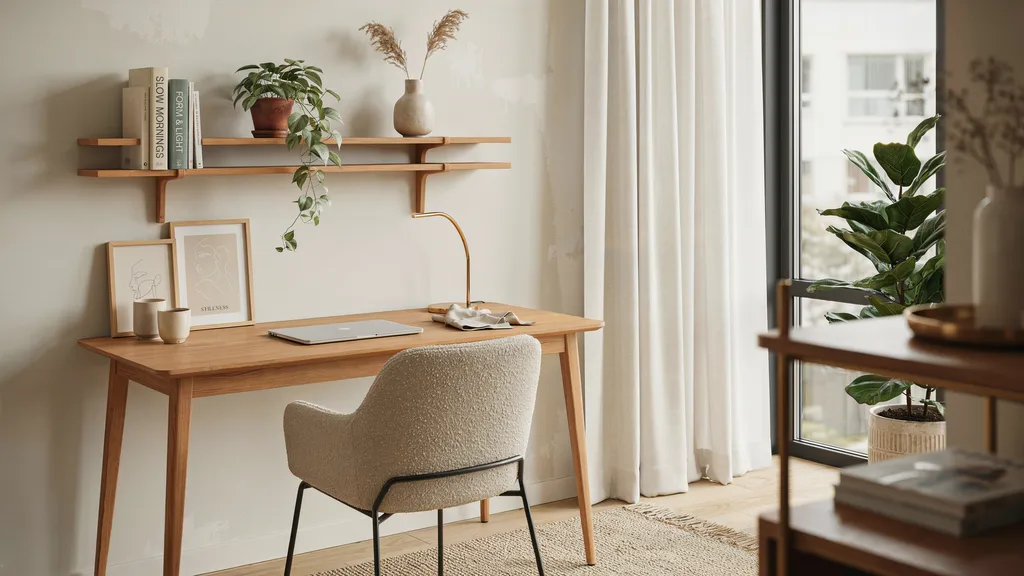
When you can’t spread out, go up. I installed three floating shelves above my desk using Command strip shelf brackets (renter-friendly, no drilling), and they hold my plants, books, and a few small art prints.
Floating shelves keep your surfaces clear, which is critical in a studio. A cluttered countertop in a small space makes the whole apartment feel messy. I stagger mine at different heights instead of lining them up perfectly, and it creates visual interest without looking like a warehouse shelf. Keep the styling minimal though. Three to five items per shelf max, or it starts looking cluttered again.
5. Choose Furniture with Hidden Storage
My bed has four drawers underneath it. My ottoman opens up to hold blankets. My coffee table has a lift-top with space for my laptop and notebooks. Every single piece of furniture in my studio does double duty, and that’s not an accident.
When you’re shopping for a small studio, always ask yourself: “Does this store something?” If the answer is no, keep looking. The IKEA Brimnes bed frame is one of the best home decor ideas for small studio apartments because it gives you a full dresser’s worth of storage in a footprint you’re already using. I donated my actual dresser after getting it.
6. Use Mirrors to Fake More Space
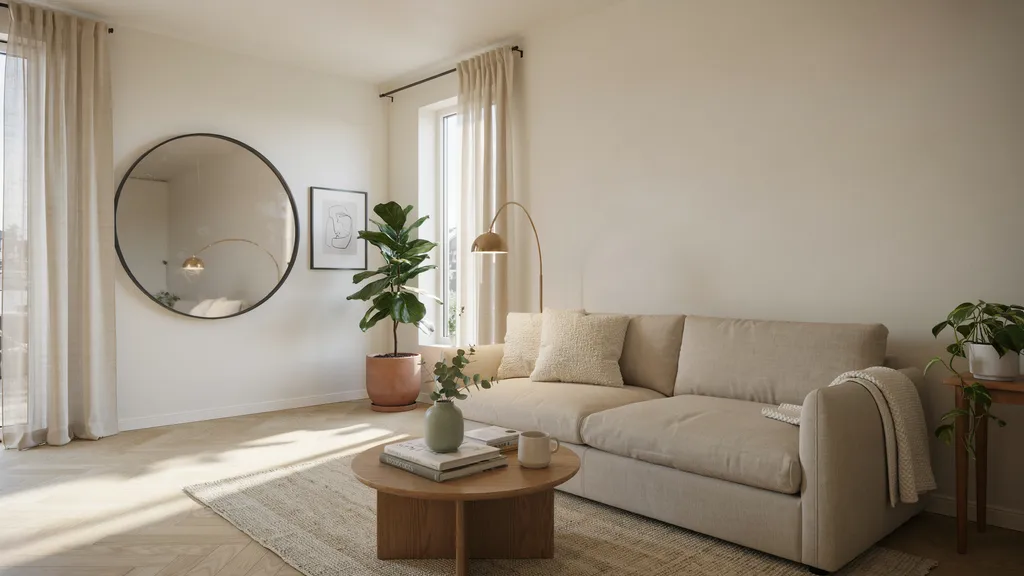
This one sounds like a cliché, but it genuinely works. I hung a large round mirror (36 inches) across from my window, and it bounces light all the way to the back wall. The room looks noticeably bigger and brighter, especially in the morning.
Don’t go overboard with multiple mirrors unless you want your apartment to feel like a dance studio. One large statement mirror does more than three small ones. I found mine at HomeGoods for $60, which felt like a steal for how much it changed the room. Lean a full-length mirror against a wall if you can’t hang one, it adds depth and looks intentional.
7. Pick a Cohesive Color Palette and Stick to It
My first mistake was buying decor in every color I liked. The result looked like a yard sale. Once I committed to a palette of warm whites, sage green, and natural wood tones, the whole studio started feeling calm and put-together.
Three colors is the magic number for small spaces. Pick a dominant neutral, a secondary accent, and one pop color. Use the pop color sparingly, like on throw pillows or a single piece of art. This creates visual cohesion, which tricks your eye into reading the space as larger. I repainted my thrift store finds to match my palette, and honestly, that alone made the biggest visual difference.
8. Invest in Good Lighting (Skip the Overhead)
The overhead light in my studio is a fluorescent nightmare. I haven’t turned it on in two years. Instead, I use three warm-toned lamps placed at different heights: a floor lamp by the couch, a table lamp on my nightstand, and an LED strip behind my desk.
Layered lighting makes any space feel cozy and intentional. One harsh ceiling light flattens a room. Multiple warm sources create depth and shadow, which actually makes a small apartment feel more spacious. I use Philips Hue bulbs so I can adjust the warmth throughout the day. It sounds extra, but once you try it, regular lighting feels broken.
9. Use a Rug to Anchor Each Zone
A rug does more than look pretty. It tells your brain, “This is the living room area” or “This is where I eat.” I have two rugs in my studio: a 5×7 under my couch and coffee table, and a small runner near my kitchen counter. They separate the space without any walls.
Pick rugs with low pile so they don’t feel bulky. Washable rugs from Ruggable are great for studios because you will spill coffee on them. Trust me on that. Make sure the rug is big enough that your furniture sits on it, at least partially. A tiny rug floating in the middle of a room makes the space look smaller.
10. Hang Art at the Right Height
Most people hang art way too high. The center of your piece should sit at roughly 57 inches from the floor, which is average eye level. I learned this after putting three holes in my wall trying to eyeball it.
In a small studio, one large piece of art has more impact than a gallery wall of ten small frames. A gallery wall can work, but it requires careful spacing and consistent frame styles or it reads as visual noise. I went with one oversized abstract print above my couch and it pulls the whole room together. If you’re on a budget, Society6 and Juniper Print Shop have great affordable options.
11. Fold-Down and Nesting Furniture Is a Lifesaver
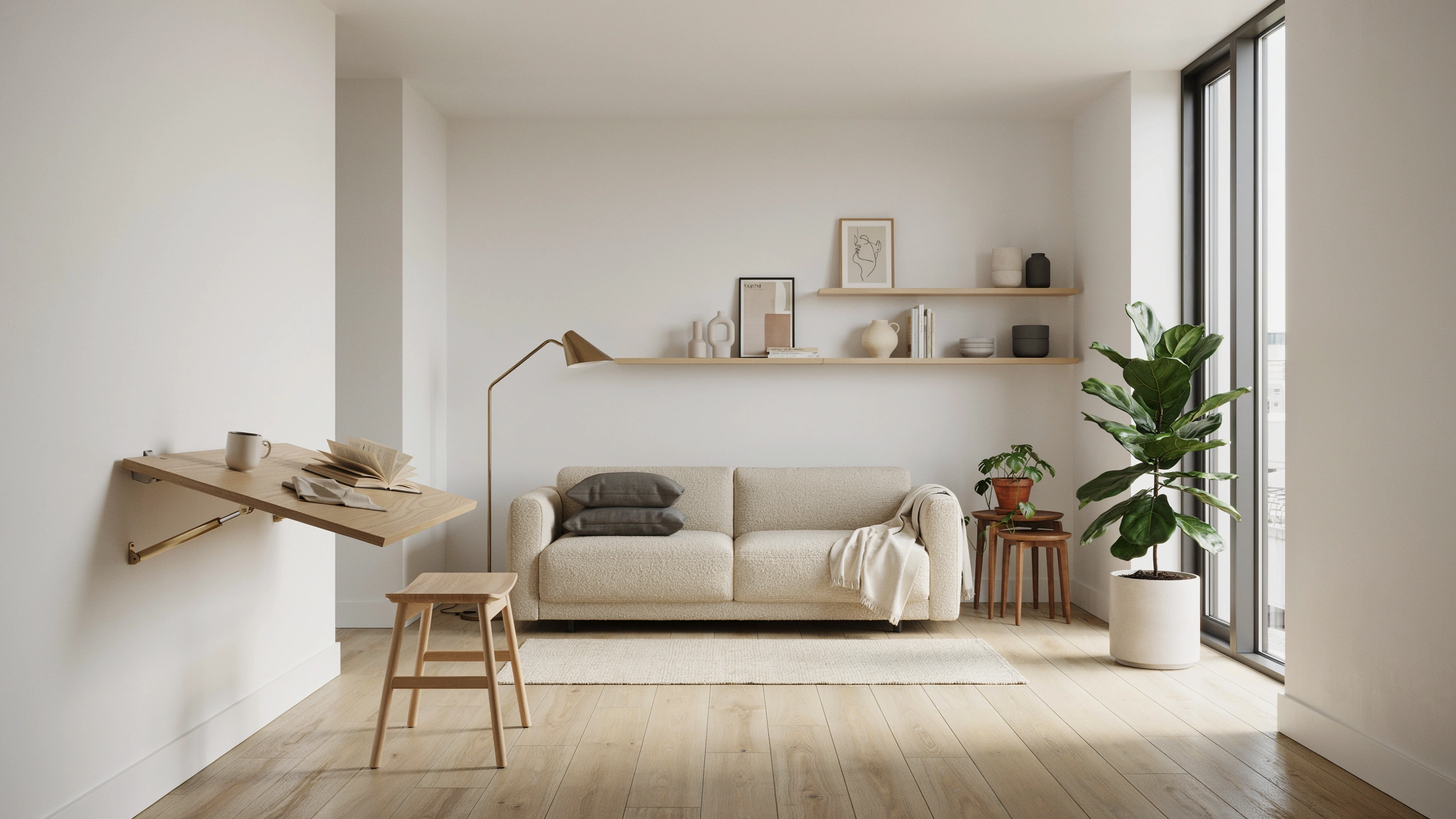
My dining table folds flat against the wall when I’m not using it. I got a wall-mounted drop-leaf table from Wayfair, and it’s the single smartest purchase I’ve made for this apartment. When it’s down, I have a full dining surface. When it’s up, I have three extra feet of floor space.
Nesting side tables work on the same principle. I keep two stacked by my couch and pull the smaller one out when friends visit. Furniture that disappears when you don’t need it is the entire philosophy of decorating a studio well. Anything that stays in one place, taking up permanent real estate, needs to earn that space every single day.
12. Keep Surfaces Clear and Intentional
This is less about buying things and more about restraint. My kitchen counter has a coffee maker, a small plant, and nothing else. My nightstand has a lamp, my phone charger, and a book. That’s it.
Every visible surface in a studio apartment is on display at all times. There’s no closing a bedroom door to hide the mess. So I adopted a rule: nothing sits on a surface unless it’s beautiful or used daily. Everything else goes in a drawer, a basket, or a bin. This one habit keeps my 400 square feet looking clean without me doing a full-on deep clean every weekend.
Frequently Asked Questions
How do I make my studio apartment look bigger without spending a lot?
Light paint colors, one large mirror placed across from a window, and keeping surfaces clutter-free will make the biggest difference for almost no money. Rearranging furniture so it doesn’t block sightlines also helps a lot. You don’t need to buy new stuff. Sometimes just removing things and letting the space breathe does more than adding decor.
What are the best home decor ideas for small studio apartments on a budget?
Thrift store furniture painted in a cohesive color palette, floating shelves using command strips, and curtain room dividers are all affordable and effective. I’ve spent more at Target on impulse buys than I have on the decor that actually changed my space. Focus on a few high-impact changes rather than lots of small accessories.
Should I use dark colors in a small studio?
You can, but use them strategically. A dark accent wall behind your bed can add depth and coziness without making the whole room feel cramped. I’d avoid painting all four walls a dark shade in a studio unless you get incredible natural light. Pair any dark tones with light furniture and reflective surfaces to balance things out.
How do I separate my bedroom from my living space in a studio?
A bookshelf turned sideways, ceiling-mounted curtains, or even a tall plant arrangement can create visual separation. The key is choosing something that divides without blocking light or making the space feel boxed in. I combine a Kallax bookshelf with sheer curtains and it gives me genuine privacy without sacrificing openness.
What kind of furniture works best in a studio apartment?
Multi-functional pieces are your best friend. Beds with storage drawers, ottomans that open up, fold-down desks, and nesting tables all earn their place in a small footprint. Avoid oversized couches, bulky dressers, or anything that serves only one purpose. Every piece should store, fold, stack, or convert.
Is it worth hiring an interior designer for a studio apartment?
If your budget allows, even a one-hour virtual consultation can give you a layout plan that saves you months of frustration. But honestly, most studio layouts follow similar principles, and you can learn a lot from YouTube channels like Lone Fox or Alexandra Gater. I decorated my entire place using free online inspiration and it turned out better than I expected.
Conclusion
Living in a studio taught me that good design isn’t about having a big space. It’s about being intentional with every square foot you do have. These ideas came from real mistakes, real purchases, and real “aha” moments in my own tiny apartment. What’s the one change that made the biggest difference in your small space?