

If you’ve ever walked into a beautifully styled room and immediately felt your chest tighten because there was just too much stuff, you’re my people. These top rated home decor ideas for people who dislike clutter come straight from my own home and my own trial-and-error journey toward spaces that feel open, intentional, and actually peaceful. Clutter-free doesn’t mean boring. It means every single thing earns its spot.
1. Floating Shelves With a Strict “Three Item” Rule
Floating shelves look incredible on walls, but they become clutter magnets in about two weeks. I learned this the hard way when my living room shelf turned into a junk drawer hanging on the wall.
The fix is dead simple: never put more than three items on a single shelf. One plant, one small piece of art, one candle. That’s it. The IKEA Lack shelf in white has been my go-to for years because it’s cheap, clean-lined, and easy to mount. The empty space around those three items is what actually makes the shelf look styled and intentional.
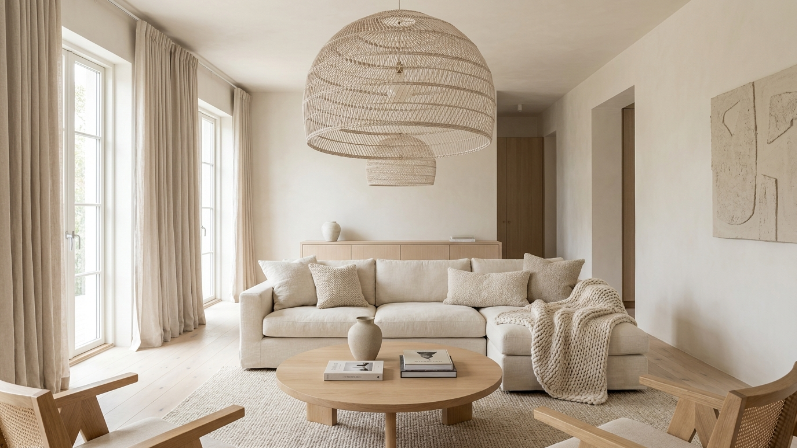
2. A Single Statement Light Fixture Instead of Multiple Lamps
Table lamps take up surface space, and surface space is sacred when you hate clutter. I swapped out three lamps in my living room for one oversized pendant light from West Elm, and the difference was immediate.
A bold fixture pulls the eye upward and off your surfaces. It also frees up your side tables for just one or two things instead of cramming a lamp, coaster, remote, and candle onto a 12-inch square. If you rent and can’t hardwire anything, a plug-in swag pendant gives you the same effect without calling your landlord.
3. Closed Storage Furniture Over Open Bookcases
Open shelving looks great on Instagram. In real life, it looks great for about four days before books start leaning sideways, random mail piles up, and suddenly your living room feels chaotic. I switched to a closed credenza from Article and never looked back.
Closed storage hides the visual noise while keeping everything accessible. Media consoles, sideboards, and cabinets with doors let you stash remotes, chargers, blankets, and all the stuff you actually need but don’t want to stare at. One tip: choose pieces with legs that show a few inches of floor underneath. That gap creates a visual lightness that makes the room feel bigger.
4. Neutral Textiles That Layer Without Competing
When you keep your throws, pillows, and rugs in a tight color palette, you can layer textures without making the room feel busy. I stick to whites, warm grays, and soft tans. Three pillow covers from H&M Home in similar tones look cohesive and calm.
The mistake most people make is mixing too many colors and patterns because a magazine told them to “be bold.” Bold is fine if you love maximalism. But if clutter stresses you out, visual simplicity in textiles is one of the fastest ways to make a room breathe. Linen is my favorite fabric for this because it looks relaxed without trying hard.
5. Wall Art in Large Scale, Not Gallery Walls
Gallery walls are fun to create and genuinely terrible for anyone who dislikes clutter. All those frames, varying sizes, and mixed media pieces create exactly the kind of visual chaos that makes your brain feel overloaded.
One large piece of art on a wall does so much more with so much less. I bought a 36×48 abstract print from Minted, framed it in a simple oak frame, and it became the entire focal point of my dining area. No competing elements. No fussy arrangement. Just one beautiful thing that anchors the room and leaves the rest of the wall clean and open.
Top Rated Home Decor Ideas for People Who Dislike Clutter: The Hidden Essentials
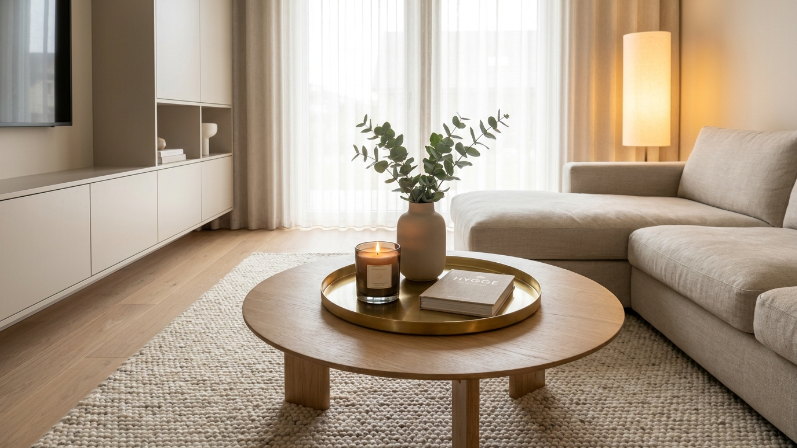
Some of the best clutter-free decor choices aren’t about what you add, they’re about what you put systems around. Trays, for example, are a minimalist’s best friend. A simple round tray on a coffee table corrals two or three items into a deliberate grouping instead of letting them scatter across the surface.
I keep a brass tray from Target’s Threshold line on my nightstand. It holds my phone, a small candle, and nothing else. Without the tray, those same items look messy. With the tray, they look curated. It’s a tiny psychological trick, but it genuinely works. Baskets do similar work on a larger scale. One woven basket by the couch holds all the throw blankets that would otherwise drape over every surface like textile ghosts.
6. Plants, But Fewer and Bigger
Twelve small succulents on a windowsill might sound cute, but they create visual clutter fast. I consolidated my plant collection down to four large plants in simple ceramic pots, and my apartment instantly felt calmer.
A single fiddle leaf fig in a corner or a big snake plant on the floor makes a stronger design statement than a scattered army of tiny pots. Fewer plants also means less maintenance, less watering, less soil on your surfaces, and less guilt when you inevitably forget about the one hiding behind the toaster. Go big, go minimal, and choose planters in one consistent color.
7. Hidden Cord Management
Nothing ruins a clean room faster than a spaghetti pile of cords behind your TV or desk. I spent fifteen dollars on a cable management box from Amazon (the brand D-Line makes a solid one), and it completely changed how tidy my entertainment center looks.
Velcro cable ties, adhesive cord clips along the back edge of your desk, and a simple surge protector tucked inside a box keep everything powered and connected without the visual mess. This is one of those details that nobody notices when you do it right, but everyone notices when you don’t. If you work from home, taming your desk cords will do more for your sense of calm than any candle ever could.
8. Mirrors to Add Depth Without Adding Stuff
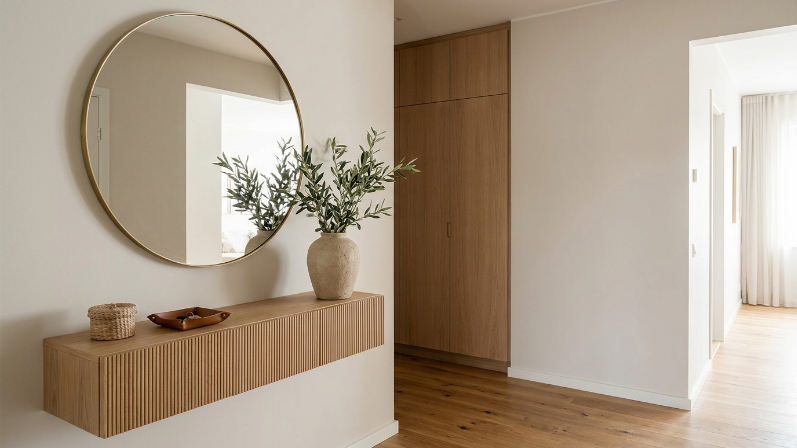
A well-placed mirror adds light, creates a sense of space, and counts as decor without putting a single object on a shelf. I have a large round mirror from CB2 above my entryway console, and it makes the small hallway feel twice as wide.
Mirrors work especially well in rooms where you’ve intentionally kept things minimal because they amplify the openness you’ve already created. Lean a tall floor mirror against a wall for a relaxed look, or mount a statement mirror where you’d normally hang art. Either way, you get visual interest without adding any clutter to horizontal surfaces, which is always the goal.
9. Intentional Negative Space
This is the one that took me the longest to accept. Empty space on a wall, an empty corner, a tabletop with nothing on it, these are design choices, not things that need filling. Western decor culture trains us to think every blank spot is a problem waiting for a solution.
It’s not. That breathing room is what makes a clutter-free home feel so good. I have an entire wall in my bedroom with nothing on it, and it’s my favorite wall in the house. When guests come over, nobody says “that wall looks empty.” They say “your room feels so relaxing.” The emptiness is the point. Protect your negative space the same way you’d protect any other design decision.
10. A “One In, One Out” Decor Policy
The best top rated home decor ideas for people who dislike clutter mean nothing if you keep adding to your space without removing anything. I adopted a strict one-in, one-out rule two years ago, and it’s the single habit that keeps my home looking the way I want.
Buy a new throw pillow? Donate one. Bring home a candle? Toss the burned-down one. Pick up a small vase at a flea market? Something else leaves. This isn’t about deprivation. It’s about keeping a cap on the total number of objects in your home so things never slowly creep back toward chaos. FYI, it gets easier with practice, and eventually you start being much more intentional at the store before you even buy.
Frequently Asked Questions
How do I make a minimalist room feel warm and not sterile?
Texture is everything here. Layer different materials like linen, wood, wool, and ceramic in a tight color palette. Warm lighting matters too. Swap any cool-toned bulbs for soft white or warm white LEDs. A single throw blanket draped over a chair arm adds warmth without clutter. The goal is cozy simplicity, not a doctor’s waiting room.
What are the best stores for clutter-free home decor?
I shop IKEA for clean-lined basics, Target’s Threshold and Casaluna lines for affordable textiles, and Article or West Elm for statement furniture. Muji is fantastic for small organizational items that look good enough to leave out. For art, Minted and Juniper Print Shop both carry large-format prints that work beautifully as standalone wall pieces.
Can you have kids and still keep a clutter-free home?
Absolutely, but you need smart storage that works for the whole family. Closed toy bins, baskets tucked into shelving units, and a daily five-minute reset habit go a long way. I’ve seen families use IKEA Kallax units with canvas inserts so kids can toss toys in and close the cube. Perfect doesn’t exist, but systems help a lot.
What home decor items create the most clutter?
Small decorative objects are the biggest offenders. Think figurines, tiny picture frames, decorative bowls full of random stuff, and collections displayed on every flat surface. Magazines and books left on coffee tables pile up fast too. If something doesn’t have a designated spot, it becomes clutter within a week. IMO, flat surfaces are where good intentions go to die.
How often should I edit my home decor to keep clutter down?
I do a quick visual sweep every season, roughly every three months. I walk through each room and ask myself if anything looks like it’s just sitting there without a purpose. Seasonal editing also lets you rotate pieces so your space feels fresh without buying new things. It takes maybe 20 minutes and always makes me feel lighter.
Conclusion
A clutter-free home isn’t about owning less for the sake of it. It’s about only keeping and displaying things that genuinely make your space feel good. What’s the one room in your house that could use a little breathing room right now?