

The best home decor ideas for people who work from home aren’t about making your space look like a Pinterest board. They’re about surviving Monday mornings without wanting to crawl back into bed. I’ve been remote for over four years now, and I’ve learned the hard way that your environment shapes your output more than any productivity app ever will. A sad, cluttered corner with bad lighting? That’s a recipe for burnout. The right decor choices genuinely change how you feel, focus, and show up every single day.
1. A Desk That Actually Fits Your Space
Not everyone has a spare bedroom to convert into a home office. I worked from my kitchen table for eight months before I finally bought a compact writing desk from IKEA, and the shift was immediate.
Pick a desk that matches the room’s dimensions, not your fantasy office. A slim 40-inch desk works beautifully against a wall or in a living room corner. Floating desks are great for tiny apartments. The point is having a surface that signals “work happens here” without dominating your entire home. Measure twice, buy once.
2. Warm, Layered Lighting Over Harsh Overheads
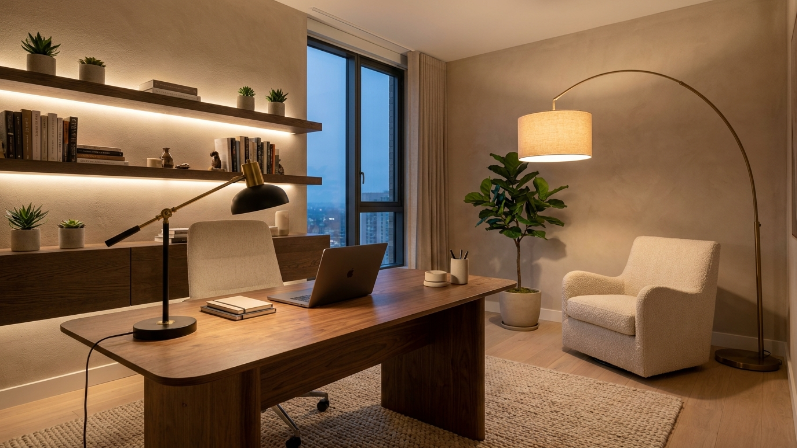
Overhead fluorescent lights are a fast track to headaches. I swapped mine for a combination of a warm-toned desk lamp and a floor lamp behind my chair, and my eyes thanked me within days.
Layer your lighting with three sources: ambient (a soft overhead or floor lamp), task (a focused desk lamp like the BenQ ScreenBar), and accent (a small LED strip or candle nearby). This setup reduces eye strain during long screen hours and makes your workspace feel intentional rather than clinical. Good lighting also makes you look better on video calls, which is a nice bonus.
3. A Real Chair, Not a Dining Room Castoff
I sat in a wooden dining chair for my first year of remote work. My lower back still hasn’t fully forgiven me. Investing in an ergonomic office chair was the single best purchase I made for my home office.
You don’t need to spend $1,500 on a Herman Miller, though they’re incredible. The HON Ignition 2.0 and the Autonomous ErgoChair are solid options under $400. Look for lumbar support, adjustable armrests, and breathable mesh. Your chair is where you spend 6 to 10 hours a day. Treat it like the critical piece of decor it is, because it affects both how your space looks and how your body holds up over time.
4. Plants That Earn Their Spot
Adding a couple of plants near my monitor was one of those small changes that made an outsized difference. The room felt less sterile, and I genuinely started looking forward to sitting down at my desk.
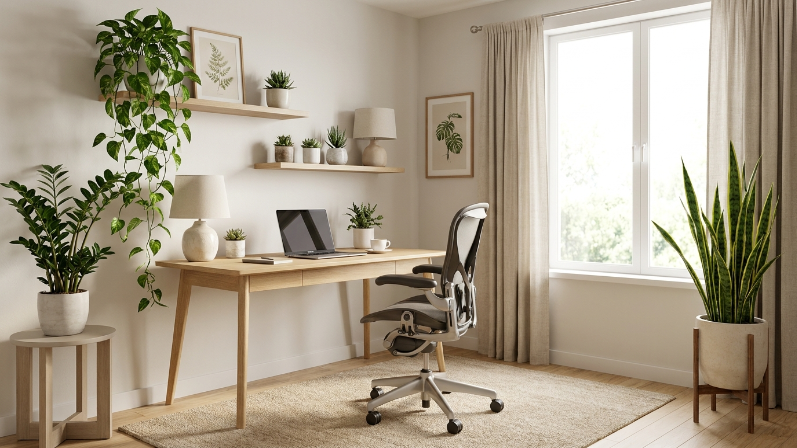
Go with low-maintenance options if you don’t have a green thumb. Pothos, snake plants, and ZZ plants thrive on neglect. A small succulent on your desk or a trailing pothos on a nearby shelf adds life without adding another thing to your to-do list. Studies from places like NASA and the University of Exeter have shown that indoor plants reduce stress and boost concentration. Real ones work best, but high-quality faux plants are totally fair game if you’re a serial plant killer.
Best Home Decor Ideas for People Who Work From Home: Wall Art and Personal Touches
Bare walls make a room feel temporary, like you just moved in and haven’t committed yet. Hanging a few pieces of art or personal photos near your workspace creates a sense of identity and comfort that generic office spaces never provide.
I have a framed print from a trip to Lisbon and a small corkboard with notes and photos above my desk. It’s nothing fancy, but it makes the space feel mine. Choose art that calms you or motivates you, not what looks trendy on Instagram. Canvas prints from Society6 or Etsy are affordable and easy to swap out when your taste shifts. One or two meaningful pieces beat a gallery wall of things you feel nothing about.
5. Noise Control With Soft Textures
Here’s something most decor guides skip: sound matters. Hard floors, bare walls, and minimal furniture bounce noise around like a racquetball court. My partner’s voice carried from the kitchen straight to my desk until I added a rug and some curtains.
Layering soft textures absorbs ambient noise and makes your space quieter for calls and deep work. A medium-pile area rug under your desk, thick curtains on nearby windows, and maybe a fabric wall hanging can significantly reduce echo. These aren’t just functional choices. They add warmth, color, and texture to a room that might otherwise feel cold. Bonus: your feet will appreciate the rug during winter months.
6. Smart Storage to Kill the Clutter
Clutter is the enemy of focus. I used to have sticky notes, cables, notebooks, and random pens scattered across every surface. It looked chaotic and it made me feel chaotic.
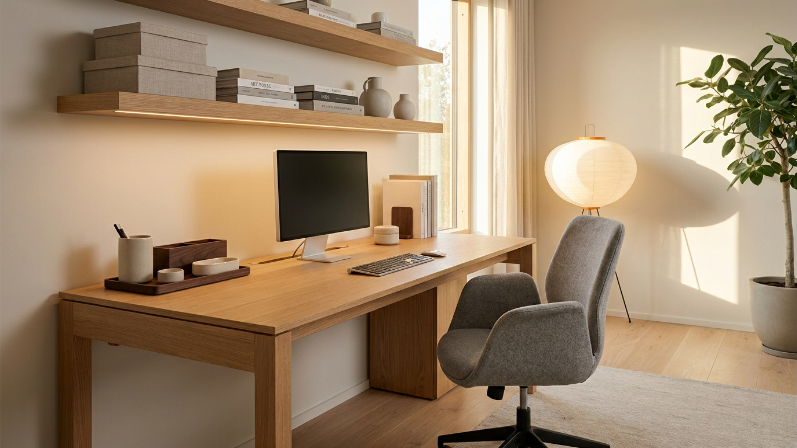
A few targeted storage pieces fixed everything. I use a small desktop organizer from Target for pens and supplies, a cable management tray under my desk, and a single floating shelf above my monitor for books and a small speaker. The key is giving every item a home so your desk stays clear at the end of each workday. A clean desk isn’t just visually pleasing. It signals to your brain that you’re ready to start fresh tomorrow.
7. A Defined Zone, Even in a Shared Room
If your office shares space with your bedroom or living room, visual boundaries matter more than you think. Without them, work bleeds into everything. You start answering emails from the couch. You eat lunch at your desk. The lines vanish.
I used a simple room divider from Amazon to separate my desk area from the rest of the living room. A bookshelf works too, or even a distinct rug that marks the “office” zone. The decor within that zone should look and feel different from the rest of the room. Different lamp, different colors, maybe a different wall treatment. That contrast helps your brain switch modes when you sit down and when you stand up to walk away.
8. A Color Palette That Supports Focus
Color affects mood more than most people realize. I painted the wall behind my desk a muted sage green after reading about how certain tones promote calm and concentration, and I noticed a genuine difference in my energy throughout the day.
You don’t need to repaint an entire room. An accent wall, a set of colored shelves, or desk accessories in a cohesive palette can shift the vibe. Blues and greens tend to support focus and calm. Warm neutrals feel grounded. Avoid all-white everything, which can feel sterile, and avoid bright reds near your work area, which can increase anxiety. Pick two or three complementary tones and weave them through your desk accessories, wall art, and textiles.
9. Natural Light Positioning
I moved my desk next to a window two years ago and my afternoon slumps almost disappeared. Natural light regulates your circadian rhythm, boosts serotonin, and just makes everything look better, including you on Zoom.
Position your desk perpendicular to the window rather than directly facing it. Facing a window causes glare on your screen, and having it behind you creates a silhouette on video calls. A side position gives you the benefits of daylight without the downsides. If your room doesn’t get much sun, a daylight-simulating bulb (look for 5000K color temperature) can bridge the gap. Pair it with sheer curtains to diffuse harsh afternoon rays without blocking them entirely.
10. Scent as an Overlooked Decor Element
This might sound a little out there, but hear me out. I started using a small essential oil diffuser on my desk about a year ago, and it became part of my “work mode” ritual. The scent of peppermint or eucalyptus tells my brain it’s go time.
Scent is tied directly to memory and emotion, so using a consistent fragrance during work hours creates a subtle mental cue. A ceramic diffuser, a high-quality candle, or even a simple reed diffuser on a shelf near your desk all work. Keep it subtle. You want a hint of something pleasant, not a wall of fragrance. Brands like Vitruvi and P.F. Candle Co. make beautiful pieces that double as actual decor objects rather than looking out of place on a professional desk.
FAQs
What’s the most important decor change for a home office?
A good chair makes the biggest immediate impact. You can tolerate bad lighting or a bare wall, but sitting in an unsupportive chair for hours will affect your posture, energy, and focus faster than anything else. Start there, then build outward with lighting and organization. Your body will tell you if you got it right.
How do I set up a home office in a small apartment?
Focus on compact furniture and vertical space. A wall-mounted desk, a single floating shelf, and a slim desk lamp can create a fully functional workspace in under 20 square feet. Use a room divider or distinct rug to visually separate the work area from your living space so your brain recognizes the boundary.
Are the best home decor ideas for people who work from home expensive?
Not necessarily. Some of the most impactful changes cost under $50. A desk organizer, a plant, repositioning your desk near a window, and adding a small rug can dramatically improve your workspace. Prioritize the items that affect comfort and focus first, then add aesthetic touches over time as your budget allows.
Does wall color really affect productivity?
Yes, research backs this up. Cooler tones like blue and green support concentration and reduce feelings of anxiety, while warm neutrals create a sense of stability. You don’t need a full paint job. A removable wallpaper accent, colored artwork, or coordinated accessories can introduce the right tones without a commitment.
How often should I update my home office decor?
Whenever it starts feeling stale or uninspiring. I swap out small things like desk accessories or wall art every six months or so, just enough to keep the space feeling fresh. Major pieces like your desk and chair can last years. Listen to your instincts. If your workspace feels draining, something needs to change.
Can plants really help with focus while working from home?
Multiple studies say yes. Indoor plants improve air quality, reduce stress hormones, and create a more pleasant visual environment. Even one or two small plants near your workspace can make a measurable difference. If you tend to forget watering, go with a snake plant or pothos. They’re practically indestructible and still deliver the benefits.
Conclusion
Your home office is the one workspace you get to fully control, so make it work for you in every way possible. The right decor choices aren’t about aesthetics alone. They’re about protecting your energy, your focus, and your sanity over the long haul. What’s the one change you’ve been putting off that you know would make your workday better?