
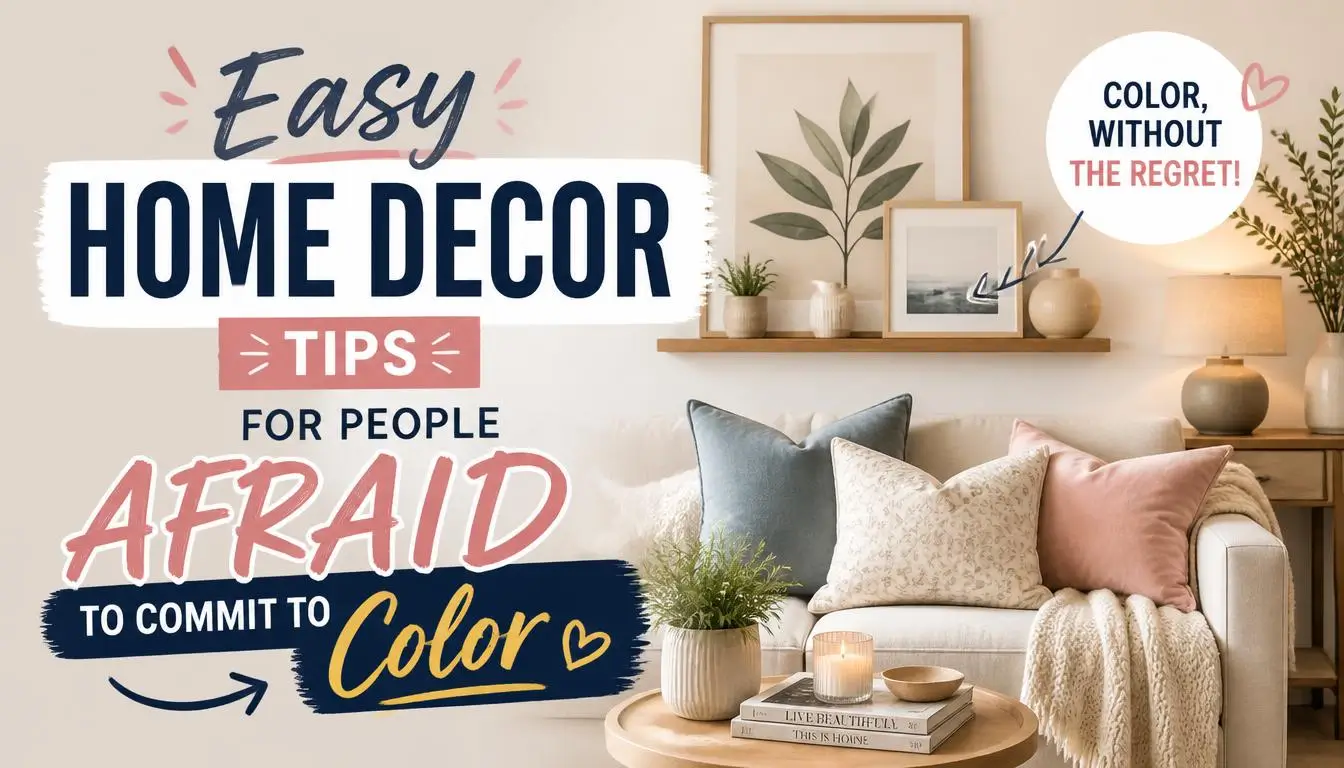
If you’ve ever stood in a paint aisle holding seventeen gray swatches and still felt overwhelmed, these easy home decor tips for people afraid to commit to color were written specifically for you. I lived in an all-white apartment for three years because picking a single accent shade felt like signing a contract I couldn’t break. The good news? Adding color to your home doesn’t have to feel permanent, scary, or expensive. You just need a few low-risk starting points.
1. Start With Throw Pillows (Seriously, They’re the Training Wheels of Color)
Throw pillows are the single easiest way to test color in a room without committing to anything. You can swap them out every season, mix patterns you’d never try on a wall, and if you hate them, they cost less than a nice dinner.
I started with two mustard yellow pillows from Target on my gray couch and it changed the entire energy of my living room. Pick one color you’re drawn to, grab two or three pillows in that family, and place them on your most neutral piece of furniture. You’ll be shocked how much life it adds. If you want to get a little bolder, mix in one patterned pillow that includes your accent color alongside a neutral like cream or charcoal.
2. Use Fresh Flowers or Dried Stems as a Color Test Run
Before you paint anything, buy a $12 bouquet from Trader Joe’s or your local grocery store and set it in the room you’re thinking about adding color to. Live with it for a week. Notice how the color interacts with the light, your furniture, and your mood.
I did this with deep burgundy dahlias in my kitchen, and within two weeks, I knew I wanted that warm tone somewhere more permanent. Dried eucalyptus works too if you’re leaning toward muted greens. The point is to let color exist temporarily in your space before you decide on anything lasting. It takes all the pressure off and lets you actually see what you respond to instead of guessing from a Pinterest photo taken in someone else’s lighting.
3. Paint Just One Small Wall or Accent Area
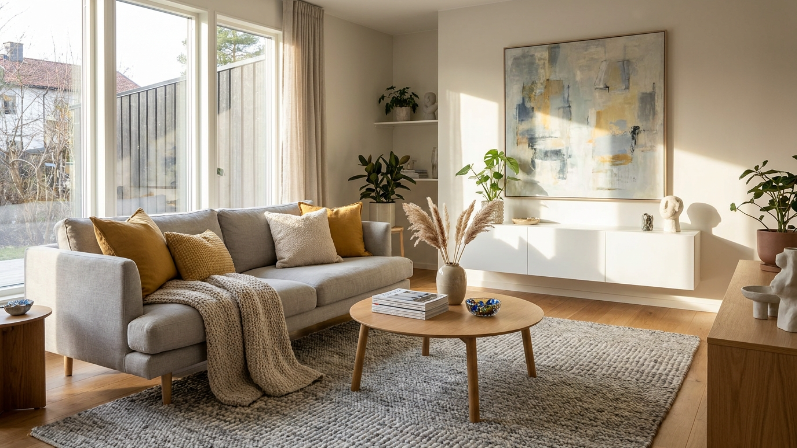
You don’t have to paint an entire room. One accent wall, one alcove, even the inside of a bookshelf can introduce color without making a space feel overwhelming. I painted the wall behind my bed a soft sage green using a sample pot from Benjamin Moore, and the whole room suddenly felt intentional instead of blank.
A quart of paint costs around $15 to $20 at most hardware stores. That’s enough for a single accent wall in a bedroom or bathroom. If you end up hating it, you can repaint it white in an afternoon. The stakes are genuinely that low. Go for muted, earthy tones if full saturation feels aggressive. Colors like Pale Oak, Saybrook Sage, or even a warm blush from Sherwin-Williams give you color without screaming at you.
Easy Home Decor Tips for People Afraid to Commit to Color: Textiles Are Your Best Friend
Rugs, curtains, and blankets carry color into a room in a way that feels soft and reversible. A patterned area rug can completely anchor a neutral space and add three or four colors at once without any of them feeling like a big commitment.
I found a vintage-style rug on Ruggable with rust, navy, and cream tones, and it tied together my whole living room without me touching a single wall. The beauty of textiles is that they layer. You can start subtle, maybe just a colored throw draped over a chair, and build from there as you get more comfortable. Curtains are another underrated move. Swapping plain white panels for something in a soft terracotta or dusty blue costs maybe $30 to $50 at IKEA or Amazon, and the effect is immediate.
5. Try Removable Wallpaper in a Small Space
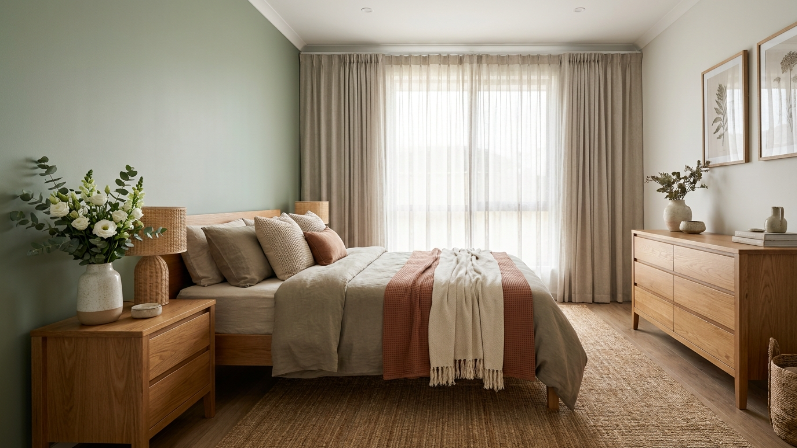
Removable wallpaper has come a long way, and brands like Tempaper and Chasing Paper offer designs that actually look high-end. I used a subtle botanical print in my bathroom, and guests always assume it’s real wallpaper that I had professionally installed.
The peel-and-stick application means you can try something bold in a powder room, pantry, or closet without any long-term consequences. If it doesn’t feel right after a month, peel it off. No damage, no drama. For color-shy people, start with a pattern that has a white or light background with just pops of your accent color. It introduces visual interest without flooding the space. A half bathroom is the perfect testing ground because it’s small, it’s enclosed, and nobody spends enough time in there to get overwhelmed.
6. Add Colorful Art Without Overthinking It
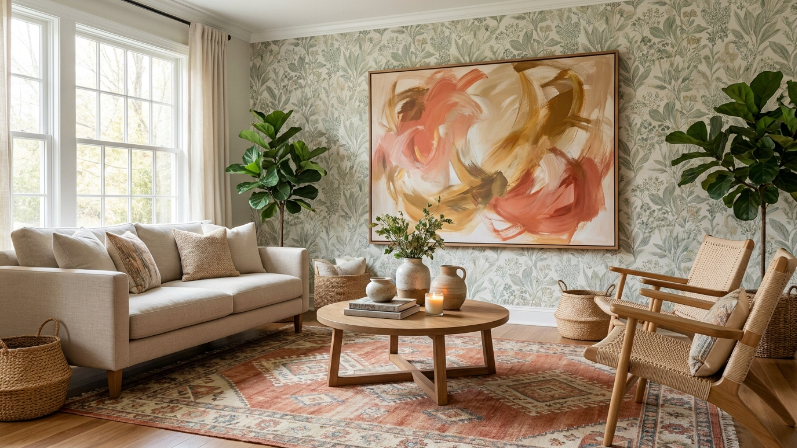
Art is personal, and it doesn’t have to match your couch. One piece of art with a color you love can become the anchor for an entire room’s palette. I bought a $40 abstract print from Etsy in warm coral and gold tones, framed it in a simple black frame from Amazon, and suddenly my all-beige dining nook had a personality.
You don’t need to fill every wall. A single statement piece above a console table or beside your bed does the job. If buying original art feels intimidating, look at affordable print shops like Juniper Print Shop or Society6. Pick something with colors that make you feel good, not what you think is “on trend.” Trends cycle out. Your gut reaction to a color lasts longer. Lean into that instinct.
7. Bring in Colored Ceramics and Shelf Decor
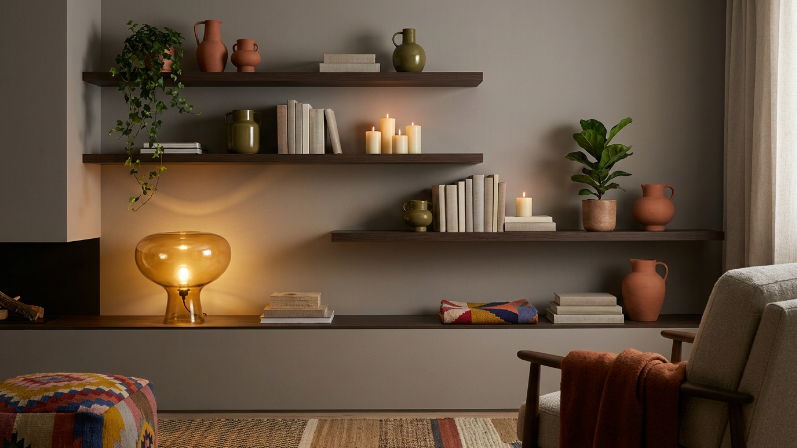
Small decorative objects add color at the detail level, and they’re easy to move around or replace. Think colored vases, ceramic bowls, candle holders, or even a set of tinted glass bottles. I picked up a few terracotta and olive green ceramic pieces from H&M Home and scattered them across my floating shelves alongside books and plants.
The trick is grouping similar tones together so the color reads as intentional, not random. Three items in the same color family on one shelf looks curated. One random teal vase next to a pink candle next to a yellow bowl looks like a yard sale. Stick to two or three accent colors max, and repeat them in small doses throughout the room. This approach lets you build confidence with color gradually without ever feeling like you’ve gone overboard.
8. Use Colored Lighting for a Zero-Commitment Glow
This one surprised me the most. Swapping out a plain white lampshade for one in a warm amber or blush tone adds color through light itself, and it’s incredibly forgiving. Warm-toned bulbs or even smart bulbs like Philips Hue let you control the color temperature of your room without touching a single surface.
I tried a dusty rose linen lampshade on my bedside table, and the warm glow it casts at night made the whole room feel cozy and intentional. You can also try colored LED strip lights behind a TV or under kitchen cabinets for an ambient effect. It’s subtle, it’s reversible, and it changes the mood of a room faster than any paint swatch ever could.
9. Lean on Plants for Natural, No-Fail Color
If every other form of color still makes you nervous, plants are your safest bet. Greenery counts as color, and it’s one that almost never clashes with anything. A tall fiddle leaf fig in a terracotta pot, a trailing pothos on a shelf, or even a cluster of succulents on a windowsill brings warmth and life into the most neutral room.
I started with a single snake plant in my living room corner, and it made such a difference that I slowly added more throughout my apartment. The pots themselves are another opportunity for subtle color. A muted blue planter or a warm clay pot adds an extra layer without competing for attention. Even if you have a track record of accidentally killing houseplants, low-maintenance options like ZZ plants and pothos are nearly impossible to mess up.
10. Commit to One Signature Color and Repeat It
Here’s the real secret that took me way too long to figure out. You don’t need to commit to a whole rainbow. Pick one color, just one, that makes you happy when you see it. Then repeat it in small, deliberate ways across your home.
Mine is warm terracotta. I have it in my throw pillows, a ceramic vase, a kitchen towel, the spine of a few books on my shelf, and a candle on my coffee table. None of these items were expensive or hard to find. But together, they create a thread that ties everything together and makes my space feel like me. This approach works for any color, whether it’s dusty blue, sage green, soft mauve, or even a warm golden yellow. One color, repeated gently, gives your home personality without ever feeling like you made a risky choice.
Frequently Asked Questions
What’s the easiest color to start with if I’m scared of bold shades?
Muted earth tones like sage green, warm terracotta, or dusty blue work beautifully for beginners. They blend with most neutral palettes and don’t feel jarring in any light. I always recommend sage green as a first step because it pairs naturally with whites, creams, and wood tones without demanding too much attention from the room.
Can I mix multiple accent colors, or should I stick to one?
Sticking to one or two accent colors is your safest approach, especially when you’re just starting out. Pick one primary accent and one secondary color that complements it. Too many colors competing in the same space can feel chaotic and overwhelming, which is exactly the feeling you’re trying to avoid when you’re easing into using color at home.
Are there easy home decor tips for people afraid to commit to color in rental apartments?
Absolutely. Removable wallpaper, throw pillows, rugs, curtains, art, and small decor objects all work perfectly in rentals because nothing requires permanent changes. I decorated my entire rental with zero paint and zero holes in the walls using Command strips and peel-and-stick products. Everything came with me when I moved, and my landlord never noticed a thing.
How do I know if a color will look good in my specific room?
Buy a paint sample or bring a colored object (a pillow, a fabric swatch, a flower bouquet) into the room and live with it for a few days. Pay attention to how it looks in morning light versus evening light. Colors shift dramatically based on natural versus artificial lighting, so never trust how a color looks in the store. Always test it in your actual space first.
Does adding color mean my home will look less minimalist?
Not at all. Minimalism is about intention, not the absence of color. A carefully chosen muted accent color repeated sparingly through a room can actually make a minimalist space feel warmer and more livable. The key is restraint. One or two colors used with purpose always looks clean and intentional, even in the most pared-down spaces.
Conclusion
Adding color to your home doesn’t require bravery, a design degree, or a willingness to live with regret. It just takes small, reversible moves and a little trust in your own taste. So what’s the one color you keep gravitating toward but haven’t brought home yet?